SMSF Property Purchase Checklist for Australian Investors
A compliance-aware checklist for buying residential property through a self-managed super fund, from trust structure to settlement.

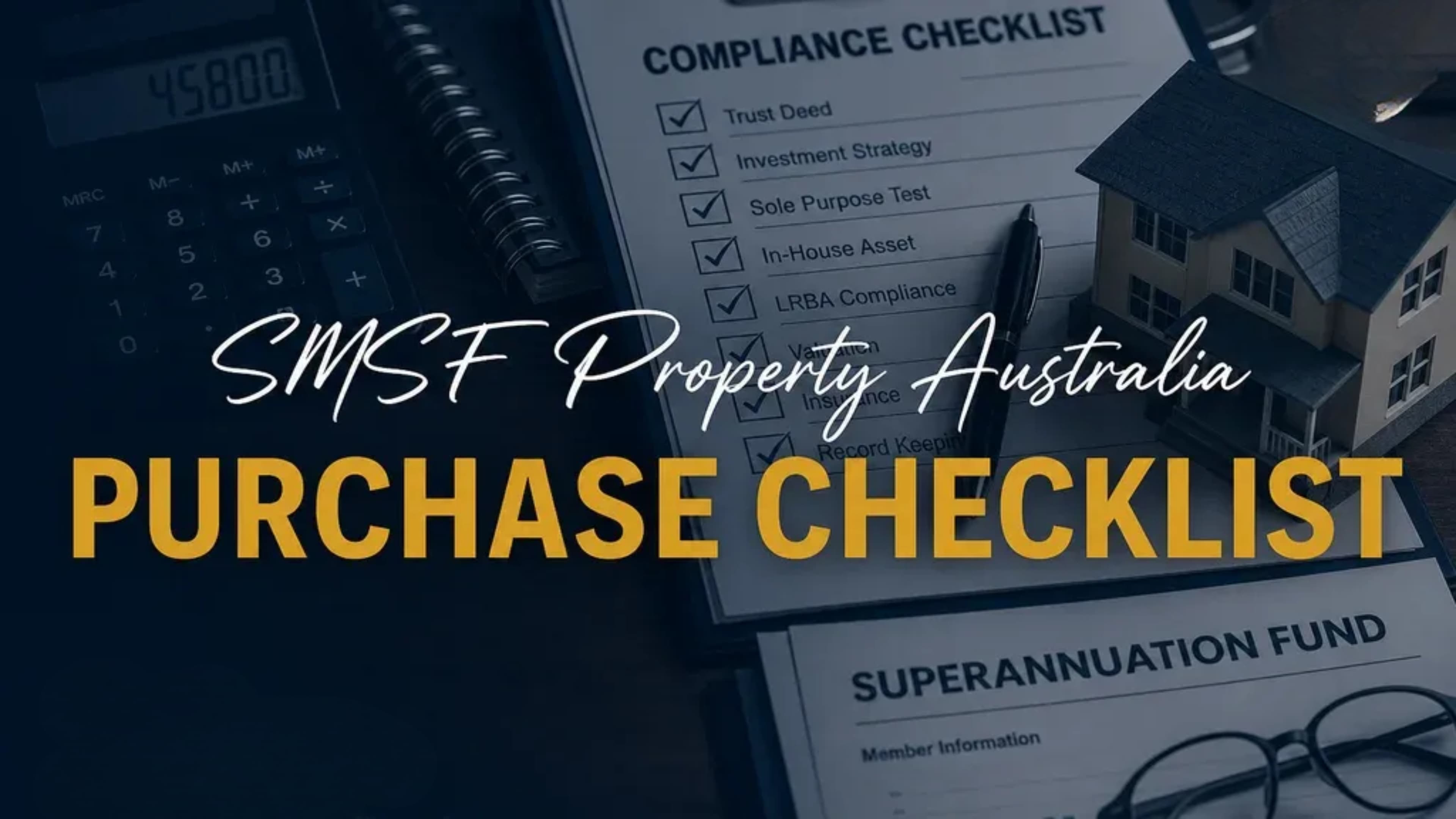
Purchasing property through a self-managed super fund (SMSF) can be a powerful wealth strategy — but the rules are strict. One structural error can invalidate the investment or trigger compliance issues with the ATO.
SMSF Property Rules at a Glance
Residential property held in an SMSF must:
- Pass the sole purpose test — provide retirement benefits to members
- Be acquired at arm's length from related parties (with limited exceptions)
- Not be lived in by fund members or related parties
- Be held in the correct trust structure with a bare trust if borrowing
Always engage an SMSF-specialist accountant and solicitor before exchanging contracts.
Pre-Purchase Checklist
| Step | Action |
|---|---|
| 1 | Confirm fund has sufficient liquidity after purchase |
| 2 | Establish bare trust if using LRBA borrowing |
| 3 | Obtain loan pre-approval from SMSF-friendly lenders |
| 4 | Ensure contract is in correct trustee name |
| 5 | Complete building and pest inspections as usual |
Liquidity Buffer
Funds need cash for ongoing expenses: loan repayments, insurance, rates, maintenance, and accounting fees. Buying illiquid property without a buffer is a common mistake.
Due Diligence Still Applies
SMSF status does not reduce the need for research. Evaluate:
- Rental demand and vacancy in the target suburb
- Growth drivers and oversupply risk
- Body corporate levies for strata assets
- Depreciation benefits (varies for new vs established stock)
Settlement and Ongoing Compliance
After settlement, the property must be managed at arm's length. Rent must be paid at market rates, expenses documented, and annual audits completed. Related-party arrangements require extra care.
Frequently Asked Questions
Yes, provided members and related parties do not live in the property and all transactions are at market value with proper documentation.